For years, Mobile Device Management (MDM) was considered the standard for managing endpoints. But as we move through 2026, the term itself no longer reflects the reality IT teams face every day. Device environments have grown more complex, more distributed, and more security-critical, while IT teams are being asked to do more with fewer resources.
This shift has forced organizations to rethink not just the tools they use, but the entire approach to endpoint management. Unified Endpoint Management (UEM) has emerged as the answer—but in 2026, UEM means far more than MDM with a new label.
Why “MDM” No Longer Reflects Modern IT Reality
The Original Purpose of MDM—and Why It Falls Short Today
MDM was built to solve a narrow problem: managing smartphones and tablets. Early MDM platforms focused on enrollment, basic policy enforcement, and remote wipe capabilities. This approach worked when device fleets were small, mobile devices represented a limited risk surface and most organizations worked in centralized locations.
Today, that model is insufficient and puts IT organizations at risk.
How IT Environments Have Changed
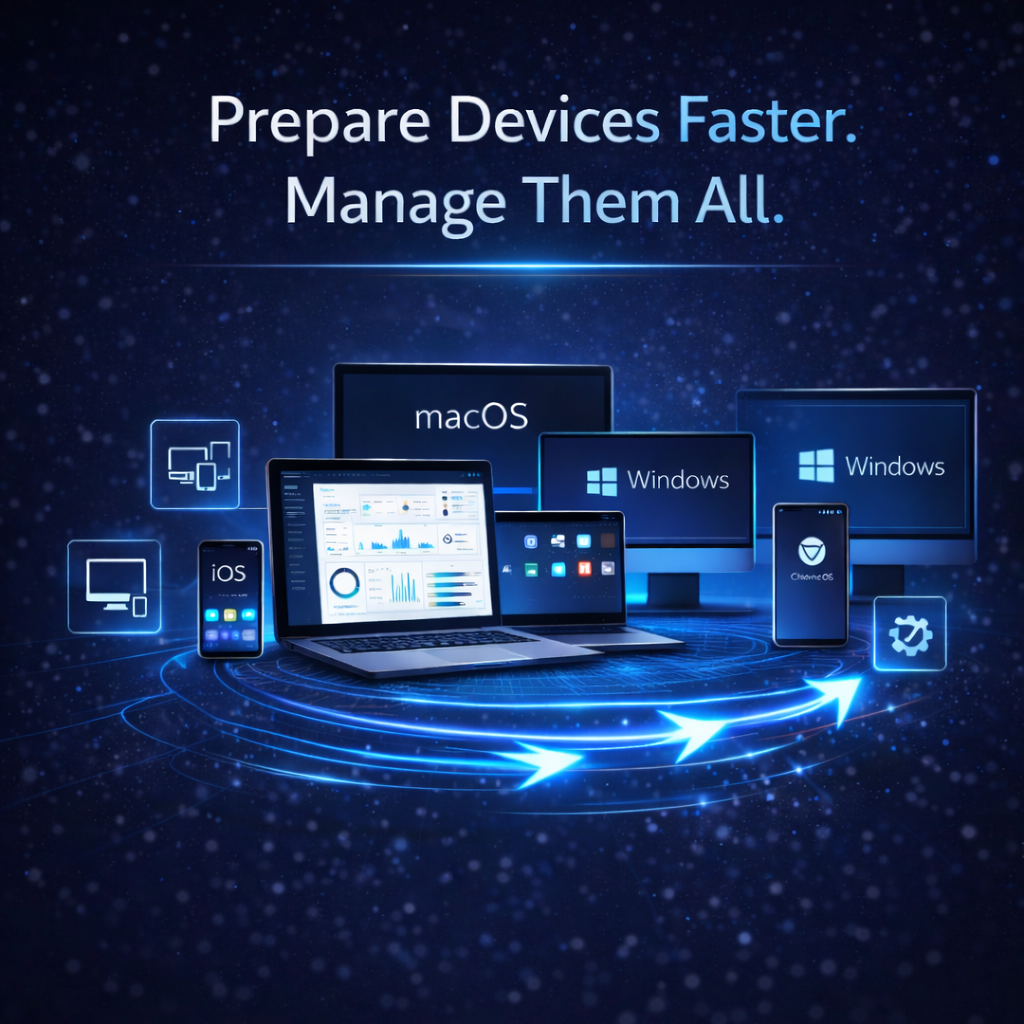
Modern IT environments are defined by diversity and scale. Organizations now manage macOS, Windows, iOS, Android, and ChromeOS devices simultaneously. Workforces are remote and/or hybrid, devices are shared or personally owned, and operating systems update constantly. IT teams need consistent visibility and control across all endpoints—not just mobile devices.
The Risk of Rebranded MDM Platforms
Many vendors have attempted to address this shift by rebranding MDM as UEM without changing the underlying architecture. The result is often a patchwork of add-ons, multiple management consoles, inconsistent workflows and sometimes more tools to manage. True UEM requires a unified foundation, not incremental fixes.
What Unified Endpoint Management Actually Means
A Practical Definition of UEM
Unified Endpoint Management is a single platform that allows IT teams to manage the entire endpoint lifecycle—from provisioning to retirement—across all operating systems. It brings device management, software deployment, security enforcement, and reporting into one cohesive system.
UEM isn’t about managing more devices. It’s about managing them with greater consistency, efficiency, and control.
How UEM Differs From MDM at a Foundational Level
MDM focuses on devices. UEM focuses on operations. In 2026, IT teams need platforms that reduce complexity, support automation, and deliver consistent outcomes at scale. That requires an architecture designed for convergence from day one.
What “Beyond MDM” Looks Like in 2026
True Multi-OS Parity
A modern UEM platform treats all operating systems as first-class citizens. Policies, workflows, and reporting should work consistently across macOS, Windows, iOS, Android, and ChromeOS. When platforms favor one OS over others, IT teams are forced into workarounds that increase risk and overhead. Focus on one OS limits the organization’s ability to expand and capture what’s good in another OS.
Deployment Is as Critical as Management
Device management doesn’t start after enrollment—it starts with deployment. In 2026, UEM platforms must support zero-touch provisioning, software packaging, scripting, updates, and remediation. Deployment is a daily operational requirement, not a secondary feature.
Full Lifecycle Management
True UEM platforms provide visibility and control across the entire device lifecycle. From initial setup to decommissioning, IT teams must be able to automate actions, enforce policies, and maintain compliance without manual intervention.
Security and Compliance Are Now Baseline Expectations
Policy-Driven Endpoint Security
Modern UEM platforms enforce security through policies, not alerts. Configuration standards, compliance checks, and automated remediation help ensure endpoints remain secure without constant oversight.
Complementing EDR, XDR, and Identity Platforms
UEM strengthens security ecosystems by ensuring endpoints are configured correctly before threats occur. Rather than adding more tools, UEM reduces gaps and minimizes noise for security teams.
Compliance Reporting That Supports Real Audits
In 2026, compliance reporting must be real-time, accurate, and defensible, especially for insurance requirements. UEM platforms should make it easy to demonstrate compliance without piecing together data from multiple systems.
Automation Is the Real Differentiator in 2026
Automation has become the defining capability of modern Unified Endpoint Management platforms. As device counts increase and operating systems evolve more rapidly, manual device management no longer scales. IT teams are expected to support larger, more complex environments without proportional increases in staffing, making automation essential rather than optional.
A true UEM platform uses automation to eliminate repetitive work and reduce human error. Automated workflows can identify non-compliant devices, apply corrective actions, and restore systems to a secure state without requiring technician involvement. This shifts IT operations from reactive troubleshooting to proactive management, improving stability and reliability across the environment.
In 2026, effective automation extends beyond simple scheduling. Conditional workflows allow actions to be triggered based on device state, user role, operating system version, or security posture. Software updates, configuration changes, and remediation steps can occur automatically, often before users notice a problem. This leads to faster resolution times, fewer disruptions, and a more consistent user experience.
Ultimately, automation allows IT teams to manage outcomes instead of individual tasks. Fewer support tickets, faster response times, and predictable operations free IT staff to focus on strategic initiatives rather than daily maintenance. This is where true UEM platforms clearly separate themselves from traditional MDM solutions.
The “Single Pane of Glass” Debate—And Why It Still Matters
The idea of a “single pane of glass” has been heavily marketed, but in 2026 it remains a critical requirement—when implemented correctly. A true single pane of glass is not just a shared dashboard. It is a unified system where policies, deployments, reporting, and automation are managed from one console using a common framework.
When endpoint management relies on multiple consoles or disconnected modules, IT teams lose efficiency. Policies must be duplicated, visibility becomes fragmented, and troubleshooting requires switching between tools. Over time, this fragmentation increases operational risk and slows response to security and compliance issues.
A genuine single-pane experience simplifies daily IT operations. Administrators gain complete visibility into the device fleet, can apply consistent policies across operating systems, and quickly identify issues without changing contexts. Centralized reporting makes it easier to support audits, leadership inquiries, and security reviews.
Most importantly, a true single pane of glass reduces cognitive load. Fewer tools mean fewer workflows to learn, fewer mistakes, and faster decision-making. In an era of limited IT resources, consolidation is not just convenient—it is essential.
The Operational Cost of Staying Stuck in MDM Thinking
Organizations that remain tied to MDM-centric approaches face rising operational costs. Managing multiple tools increases overhead, slows response times, and creates security blind spots. IT teams spend more time maintaining platforms than supporting users.
This fragmentation also contributes to burnout. Constant context switching and reactive troubleshooting drain resources and reduce effectiveness. Over time, these inefficiencies limit an organization’s ability to scale securely.
What to Look for in a True UEM Platform in 2026
A modern UEM platform should deliver true multi-OS support, native software deployment, robust automation capabilities, flexible deployment options including cloud, on-prem, or hybrid, and scalability without added complexity.
Platforms like FileWave reflect this modern approach by unifying endpoint management into a single, cohesive system designed for real-world IT operations.
Final Thoughts: The Question Isn’t “Do You Need UEM?”
By 2026, Unified Endpoint Management is no longer optional. The real question IT leaders must ask is whether their platform is truly unified—or simply MDM with a new name.
Organizations that embrace true UEM gain stronger security, lower operational overhead, and more resilient IT operations. In a world of constant change, UEM isn’t just about managing devices—it’s about enabling IT teams to succeed.