Mobile Device Security in 2026: Threats, Trends, and Defenses for SMB IT Teams
Why Mobile Security Matters More Than Ever in 2026
Small and mid-sized businesses depend on mobile devices and laptops more than ever before, but that dependence is colliding with a serious reality: IT teams are stretched thin and security risk is rising fast. Nearly 40% of IT departments operate understaffed, and about 50% of the daily work technicians perform is repetitive and time-consuming—work that should be automated to reduce human error. At the same time, about 40% of organizations still rely on multiple management tools just to keep their environments operational, creating blind spots, inefficiencies, and security exposure. In 2026, mobile device security isn’t just a technical challenge for SMBs—it’s a business stability issue, a productivity concern, and a core component of protecting customers and revenue.
The 2026 Mobile Threat Landscape for SMBs
- Staffing Challenges Have Become a Security Risk
SMB IT departments are often lean and, in many cases, stretched thin beyond capacity. A significant percentage of IT teams operate understaffed, and nearly half of the daily work technicians perform is repetitive and manual. Every manual step increases the chance of misconfiguration, missed patches, or devices slipping out of compliance. For SMBs with limited cybersecurity resources, that creates meaningful exposure.
- Fragmented Tools Create Blind Spots
Many SMB environments rely on multiple device management tools to handle different operating systems and device types. More tools mean more dashboards, more policies to maintain, and more complexity. Fragmentation slows security response time and increases the chance something critical is overlooked, which attackers are always ready to take advantage of.
- Device Diversity Continues to Grow
Modern SMBs support a wide range of devices including Windows laptops, macOS systems, iPhones, iPads, Chromebooks, Android devices, and more. Each platform introduces its own patch cadence, update requirements, user behaviors, and vulnerabilities. Without centralized control, the risk footprint expands dramatically.
Mobile Security Trends Shaping SMB Strategies in 2026
- UEM Has Replaced Traditional MDM
Legacy Mobile Device Management solutions were never built to handle today’s SMB environments. Modern teams need centralized security control across every endpoint, including laptops, desktops, smartphones, tablets, and specialty devices. Unified Endpoint Management has now become the standard, delivering broader device coverage, better visibility, stronger policy consistency, and improved long-term control.
- Automation and Self-Healing Are Now Essential
Manual IT management is no longer sustainable. SMBs increasingly rely on automation to reduce hands-on intervention, especially with limited staff. Automation and self-healing capabilities help organizations enforce policies continuously, correct compliance drift, deploy updates consistently, and remediate security issues faster and more accurately. The result is stronger protection with less repetitive effort.
- Compliance and Audit Readiness Matter More Than Ever
Cyber insurance requirements are increasing. Customers want proof that their partners protect sensitive data. SMBs must demonstrate capable device and data protection practices. Organizations need platforms that allow ongoing validation and compliance reporting across environments rather than forcing them into restrictive ecosystems.
- SaaS vs On-Prem Deployment Influences Security Strategy
More SMBs are adopting SaaS management to eliminate infrastructure overhead, reduce operational risk, and ensure systems remain continuously updated. Others prefer on-prem environments when they need additional control and isolation. The key takeaways are flexibility and capabilities. Technology should adapt to the business strategy, not force it into a singular approach. And you should not sacrifice capabilities of your device management simply because you choose on-prem over cloud (or vice versa).
What Effective Mobile Security Requires in 2026 for SMBs
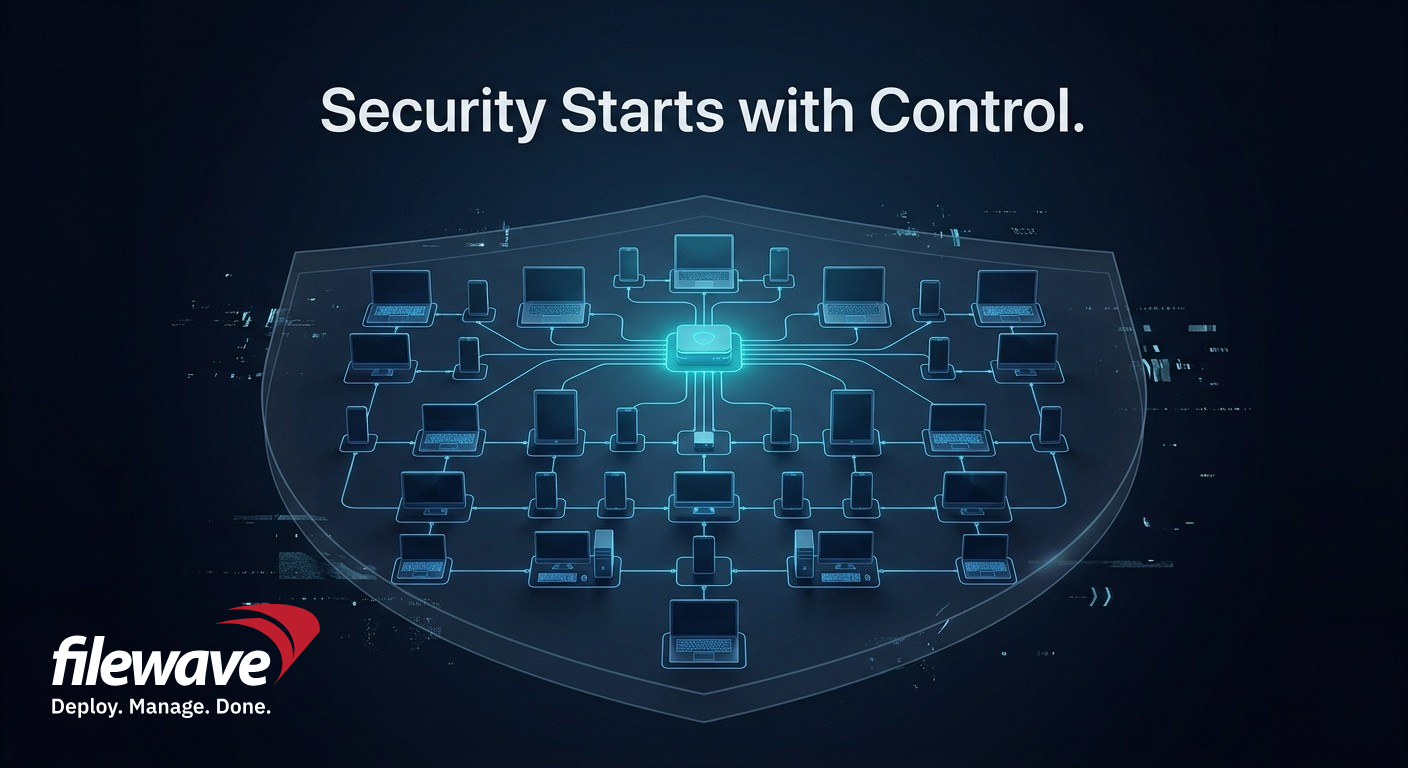
Strong mobile security requires unified control across platforms, centralized visibility, and consistent policy enforcement. SMBs need a solution capable of managing Windows, macOS, iOS, Android, and ChromeOS devices together rather than in separate silos.
Real-time visibility and asset intelligence are essential so IT teams always know where devices are, what is installed, how systems are configured, and whether they remain compliant. Patch and application management must function reliably at scale, ensuring secure deployment without disrupting users or business operations. Policy enforcement also needs to apply everywhere—inside offices, remotely, off-network, and in the field—without losing control.
How FileWave Strengthens Mobile Device Security for SMBs
FileWave is designed to help SMBs secure and manage every device in one place. IT teams can manage iOS, Android, ChromeOS, macOS, Windows, and tvOS devices through a single platform, significantly reducing tool sprawl and closing visibility gaps.
Unlike lightweight tools that only manage basic settings, FileWave provides deep insight and system-level control. SMBs gain comprehensive inventory visibility, valuable compliance tracking, and meaningful management strength that supports real-world operational demands.
Automation plays a major role as well. FileWave’s automation and self-healing capabilities enforce configurations, correct issues automatically, and reduce repetitive troubleshooting work—allowing small teams to operate with large-team capability.
Deployment flexibility is another advantage. SMBs can run FileWave as a SaaS solution for simplicity, reliability, secure backups, and automatic upgrades, or choose on-prem when they need maximum control. Combined with enterprise-grade security standards, SMBs gain confidence knowing their environment is protected.
Finally, SMBs benefit from responsive support. FileWave delivers human-centered assistance from experienced endpoint management professionals. This matters significantly when teams are lean, workloads are heavy, and downtime is not an option.
Practical Advice for SMB IT Leaders
To strengthen mobile security, SMBs should focus on consolidating overlapping tools, automating repetitive IT processes, maintaining continuous visibility, enforcing policies consistently, and choosing a deployment model that aligns with security, budget, and operational needs.
Final Thoughts
Mobile device security in 2026 is about far more than blocking cyber threats. For SMBs, it is about protecting revenue, employee productivity, business continuity, customers, and brand trust. With unified control, automation, and deep real-time visibility, SMBs can significantly improve their security posture while reducing the operational burden on IT teams.
If your SMB is reevaluating how to secure mobile devices or exploring better ways to manage endpoint risk, the right Unified Endpoint Management platform can help you build a stronger, smarter, and more secure technology foundation.